
Home » Posts tagged 'education'
Tag Archives: education
Helping Digital Immigrants Achieve Citizen Status
by Dr. Dawn Wilson
Marc Prensky (2001) labeled those born after 1989 Digital Natives. This term describes those who were exposed to digital tools from the time they were small children. In today’s schools, we have Digital Natives being taught by Digital Immigrants (whose who have had to learn the language of the digital environment). Many suggest that one of our major problems in education stems from digital immigrants teaching digital natives using archaic methods. 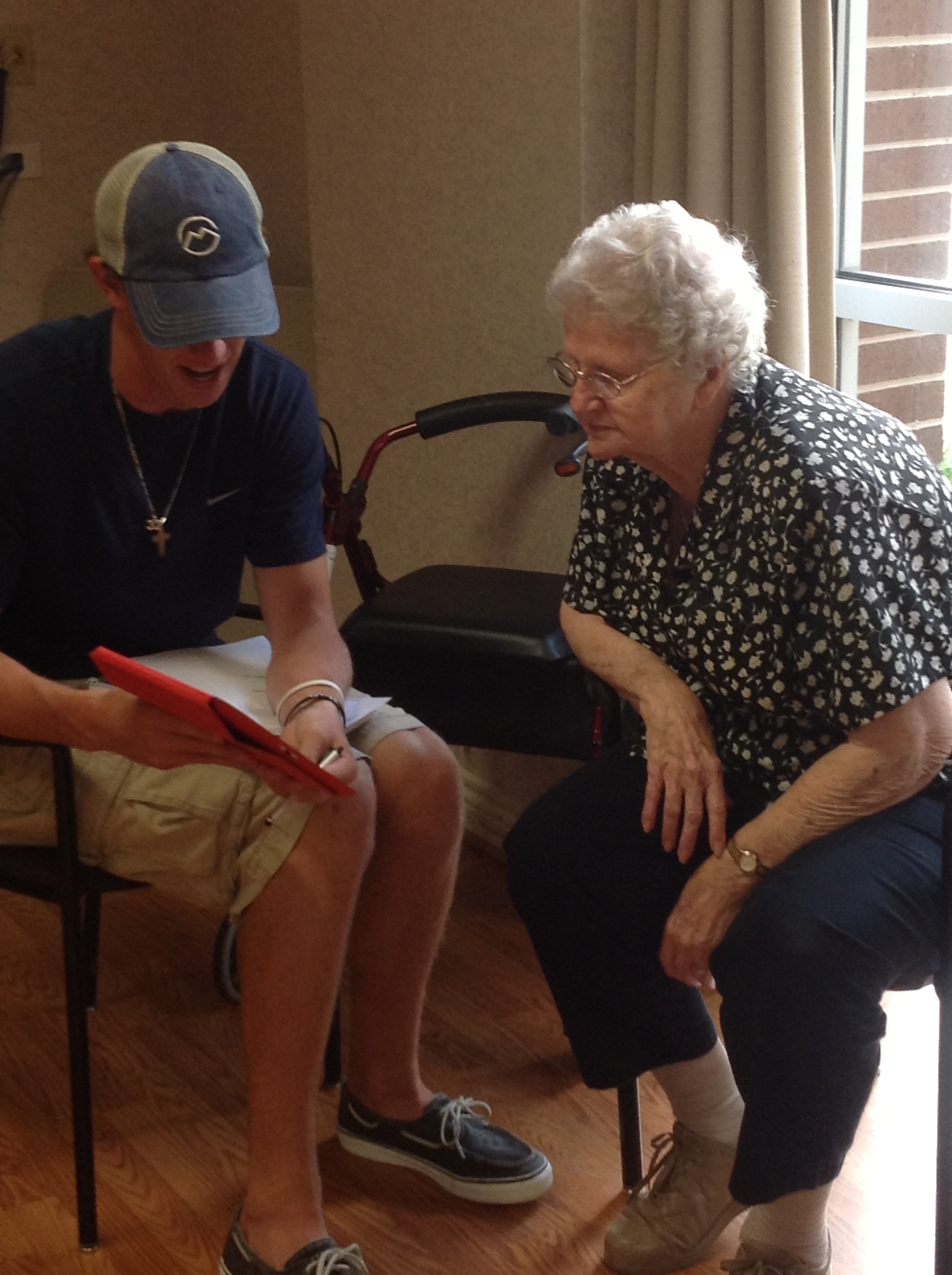 While there are many teachers embracing the use of technology as a tool for teaching and learning, many also choose to resist using these tools.
More and more districts are beginning to move 1-1 initiatives into their schools. For those more experienced, less technical teachers, this is a threatening shift. Teachers must either learn to use the tools, or leave their jobs. Schools now, more than ever, are focused on efforts to challenge immigrant‘s to improve their technology use or move on.
Could it be that the digital immigrant teachers just need to shift their teaching and learning paradigm? Recently, students in HBU’s undergraduate education program partnered with residents in a nearby senior citizen retirement center in order to help them utilize technology.  We are beginning our third year of this partnership.
I found it very interesting to see how the needs of these seniors changed in the last year. Usually seniors ask for help on email, Facebook, downloading pictures, sending e-cards and using Word. This semester their needs have changed dramatically! Many of the seniors brought iPads, and want to know how to use this tool for learning, brain exercise, picture taking, and communication. It was great to see the instant partnership develop as the HBU students shared their knowledge of iDevices. It was equally refreshing to see seniors so interested in learning to use technology.
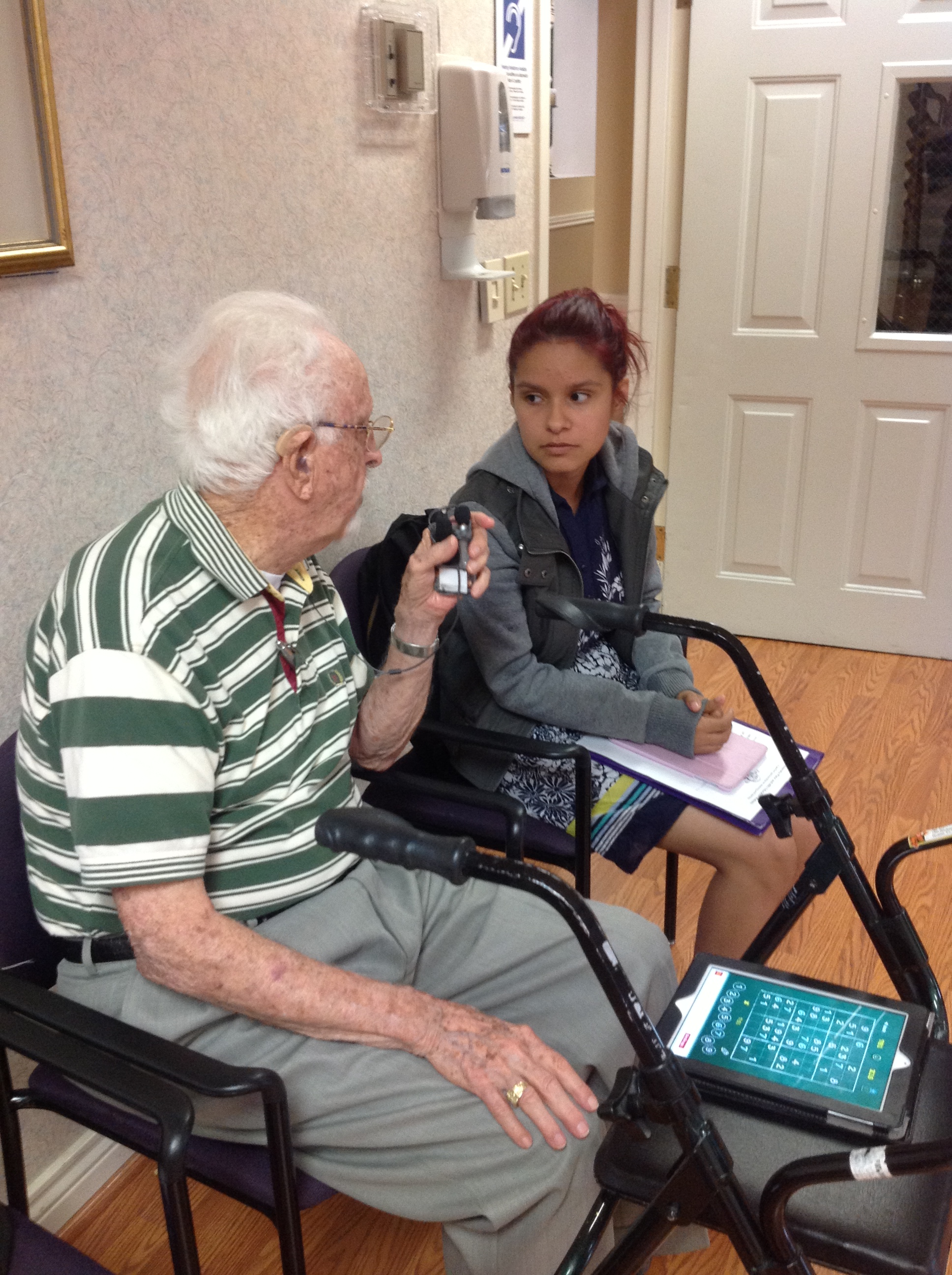 I am inspired! Watching the seniors and college students sit side by side, and investigate, problem-solve and apply new learning together made me realize that we have it all wrong in many districts and schools today. We are encouraging teachers to learn to use technology tools, and then use them with our students. I wonder why one has to happen before the other? Teachers often resist the use of technology in their classrooms because they believe they must be experts in the tool’s use. The only way to become an expert is to jump in and begin to use the tool. Why not capitalize on the knowledge and skills our students bring with them regarding the tools, while sharing our own content are knowledge and skills. If we work together and collaborate as partners with tech tools in the classroom, then we can make room for the most powerful and empowering teaching and learning for all involved. Let the students teach us what they know the most about – tech tools, and in return we will teach them the content knowledge they need.
Let’s push our egos out of the way and make room for collaborative learning with the most powerful and motivating tools as possible. Develop partnerships in the classroom for learning. It is a win-win scenario for teachers and students. Once we change our teaching paradigm, we will finally be able to overcome the real digital divide.
SAT scores and a call for increased rigor in American academics!
The Monitor on Psychology recently drew attention to a September -published article in Psychological Science that examined SAT scores and subsequent college performance of almost 150,000 students. What did they find? 2012’s scores have dropped substantially, especially in reading, since 2006. And 57% of SAT-takers did not score high enough to predict that they’ll succeed in college! (For those who are wondering – SAT scores did predict college performance over and above high school GPA.)
MORE THAN HALF?! Of students clearly interested in attending college?! Suffice it to say, I’m concerned that what we’re doing now isn’t working.
So here’s one thing I did when I read this… I emailed my new 2013 representative in the Texas State Board of Education. This is what I said:
“Representative Xxxxx,
Congratulations on another re-election to the SBOE, and thank you for the hard work you do to serve the students and families of Southeast Texas. I recently saw something that, as an educator of college students from the Houston area, really concerned me. Sackett et al. (2012) reported that 57% of SAT-takers in 2012 didn’t score high enough to predict college success, and scores have been dropping, especially in reading. I don’t have a brilliant solution for this, but I am worried.
I’m part of a faculty educating future counselors and educators, and I know they are doing their part to prepare for the challenges of helping Texas students develop into everything they have the potential to be. I just want to be a voice expressing concern and asking for help from the Texas SBOE; I hope we are all taking a long term view for our students’ college and vocational readiness.
Do you know who your State Board rep is? Find out here.
And please let me encourage you – you are exactly the right person to contact your state board representative – for the state board of education, for senate, for congress. As part of the electorate, let me encourage you to be actively involved in assisting your representatives to do their part in creating a government that reflects your values! Someone else (with more education, more background, more whatever-you-might-think-you-need) is not better equipped than you for this!
Start small if you want and tell us in the comments – If you were going to make changes to improve basic reading, writing, math, and critical thinking, what would you do?
Again, thank you so much,
Stephanie Ellis, Ph.D.
Sackett, P.R., Kuncel, N.R., Beatty, A.S., RIgdon, J.L., Shen, W., & Kiger, T.B. (2012). The role of socioeconomic status in SAT-Grade relationships and in college admissions decisions. Psychological Science, 23 (9), published online.”
 Thinking Allowed